I'll break the tutorial down into sections and even make a few product recommendations if you're in the market for some new gear.
For your viewing pleasure, I've also included a few shots from our recent self support trip on the Middle Fork Feather, CA.

Christie Eastman on Day 1
Part 1: Gear List
This is a list of gear that I typically pack when headed out for a multi-day self support trip. The list can get considerably longer with an inclement forecast. I've left off items, such as my dry suit, PFD, and other items that are basics for all kayaking trips.
Storage:
-Watershed Ocoee dry bag
-Watershed Futa Stow-float
-One small Sealline Dry bag (where I store my pin-kit) (often leaks like a sieve)
-Thermarest Dry Sack (came with my sleeping pad and doesn't contain room for much else)
-Thermarest Dry Sack (came with my sleeping pad and doesn't contain room for much else)
Sleeping:
-Sleeping Bag (20 degree down) (I use the Kelty Cosmic 20. Great warmth and compressability for amazing price point. Just don't get it wet.)
-Sleeping Pad (Thermarest Prolite size Small, includes Thermarest Dry Sack)
-Shelter (I use one light weight tarp, a throw rope, and twigs from around camp to serve as stakes) (the more time you spend building your shelter, the happier you'll be at 3am when the rain rolls in)
-I use my jacket as a pillow
Around Camp:
-Crocs (light and waterproof)
-Warm Jacket (I use a Synthetic Down jacket: REI Spruce Run Jacket, highly compressible and light)
-Polartec Union Suit (I wear this layer on the river and around camp)
-Polar-fleece lined hat
-Smart Wool Socks
-Head Lamp
-Head Lamp
Safety Equipment:
-Pin-kit (2 prusiks,3 carabiners, 2 pulleys, 15 feet of webbing, belay device)
-Breakdown Paddle
-Spot Unit (We use a spot, but I've seen others keep a Satellite Phone handy)
-Topo Maps (If you're running a new river, it helps to know where your headed and the best way to hike out in the event of an emergency)
Cooking:
-Camp Stove and fuel (MSR PocketRocket, usually 1 stove per 3 people)
-Pot (pick your lightest backpacking pot)
-Tupperware (I store my lighter, spork, and some paper towels inside and use the plastic my bowl/plate)
-Lighter (obviously) (bring backups)
-Water Filter (MSR Miniworks EX, one filter for the entire group) (some folks use iodine or chlor tabs, which saves weight, but I don't like to wait for my water)
-Nalogene


Loading up our kayaks at the Put-In for the Middle Feather. It's all gotta fit.

Finishing touches.
Part 2: Food
I'm fairly minimalistic when it comes to cooking on Self-Support trips. That being said, those dehydrated meals are expensive and often don't taste very good. I try to keep the cost down while still minimizing the weight in my bags.The following details what I usually bring for a 3 day (2 night trip). That includes 3 breakfasts, 3 lunches, and 2 dinners. It's also worth noting that it's preferable to have too much food, compared to not enough.
Breakfasts:
-Oatmeal (2 pack per morning)
-Walnuts (sprinkle on oatmeal)
-Coffee/tea
-Coffee/tea
Lunches:
-Summer Sausage/Salami (1/3 sausage per lunch)
-Tillamook Cheddar Cheese (1/3 block per lunch
-Crackers (I prefer Wheat Thins) (1/3 bag per lunch)
-Misc granola bars
-EmergenC (electrolytes at lunch time help with the food coma effect)
Dinner:
-Pre-cooked chicken brats (I usually buy one package, 5 brats total, and roast over a fire) (2 brats per night) (since these are pre-cooked and sealed, I don't mind them not being kept cold)
-Pre-mixed Bag of Salad (these bags usually don't last past the first night on the water. I really like eating something green and fresh) (Can be shoved in front of bulk head)
-Couscous (I substitute couscous for the salad on night 2) (pair with 2 brats)
-Candy (I personally like dark chocolate while camping)
-Whiskey of choice (plastic bottle)
-Powdered hot chocolate (pair with whiskey of choice and drink by the fire)
sneaky tip:
-if you end up sharing food with others and are feeling a little beat after day 1, offer to share your meal with others on the first night of the trip and rid your boat of a little weight. then they can return the favor on subsequent nights. only attempt if you're feeling extraordinarily out of shape, or if you don't like your friends..
-Whiskey of choice (plastic bottle)
-Powdered hot chocolate (pair with whiskey of choice and drink by the fire)
sneaky tip:
-if you end up sharing food with others and are feeling a little beat after day 1, offer to share your meal with others on the first night of the trip and rid your boat of a little weight. then they can return the favor on subsequent nights. only attempt if you're feeling extraordinarily out of shape, or if you don't like your friends..

Below Franklin Falls on Day 2

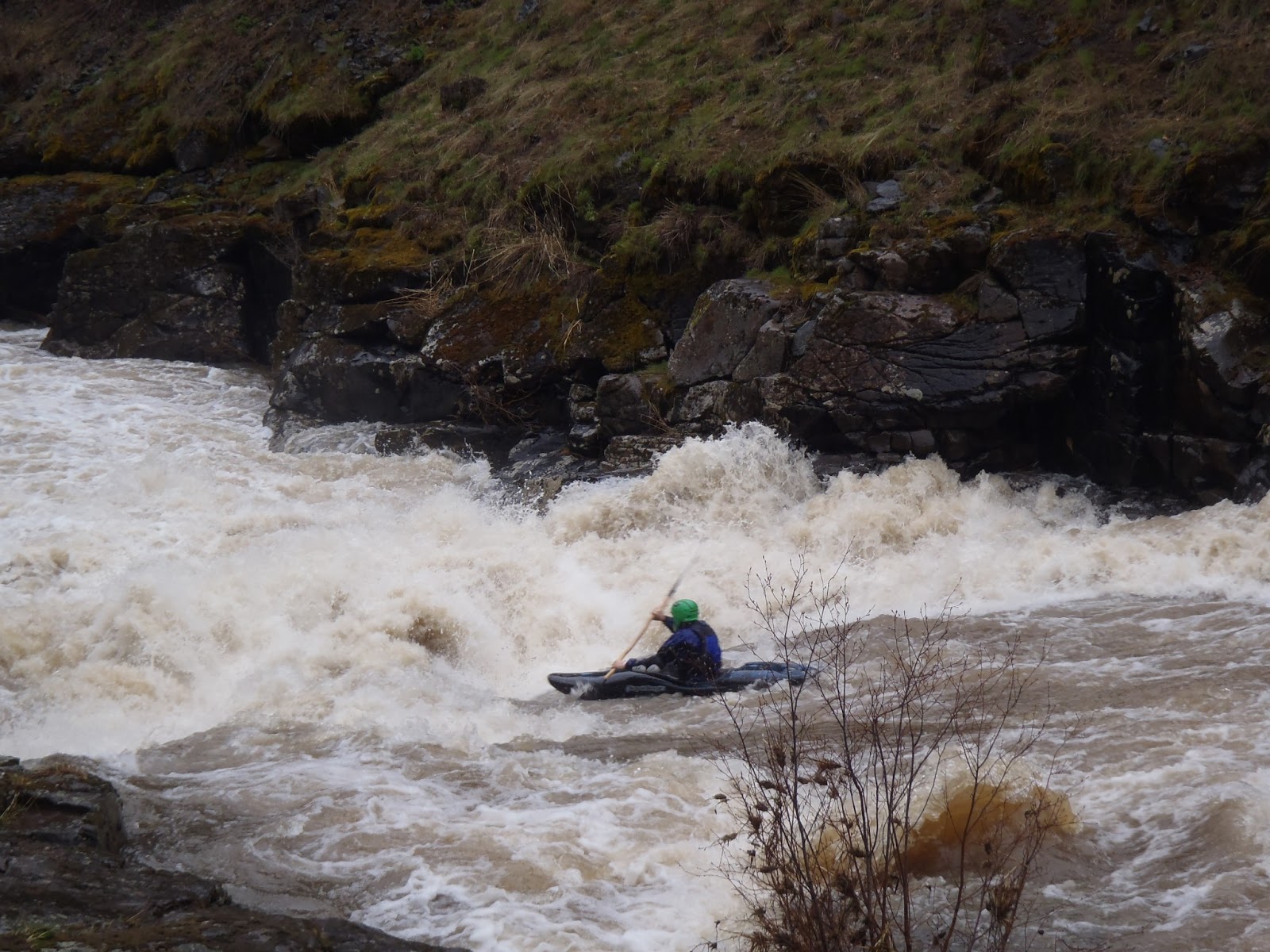
Rob Bart running Franklin Falls
Part 3: Packing
I start by pulling my foot braces out a bit and shoving some items into the front of my Nomad. These are typically items that don't have to remain dry and are heavy enough to counteract the extra weight that will be placed towards the back of the boat. I usually shove my crocs and sleeping pad (contained within a dry sack) to the very front of the boat. I then fill out the remaining space with the bag of salad and packet of brats (both sealed in plastic wrapping). Once I move by foot pegs back into place, I shift my focus to the stern.
Typically, I put all of my soft stuff (clothes and sleeping bag) inside the futa float and place the bag behind my seat on one side of the bulk head. This bag isn't easily accesible and will only be opened once I arrive at camp. On the other side I place my throw bag, breakdown paddle, and the seal line dry bag containing my pin-kit and waterfilter. Since these items are not stored inside one single dry bag, they are easily accessible and be used when needed. The items on the right side of the bulk head usually add up to roughly equal the weight of my filled futa. Make sure to attach all bags and equipment to the boat in some way. Attaching to the contact points coming off the seat in my Nomad keeps the weight closer to the center and cuts down on the swing weight.
Finally, I fill the ocoee dry bag with everything else that needs to stay dry. This includes food, the spot, and misc camp equipment. Since this bag contains your lunch, it will need be more accessible than other items in your boat. I like to keep this bag between by legs so it's easily accessible and helps center the weight of the boat. By running a cam strap around the bulk head and through the straps on the bag, I can keep this bag locked in place until I need to access it.

Andy McMurray dropping in on some typical Day 2 Boogie-Water

Michael Freeman boogieing
Part 4: Navigating the River
Even the best paddlers feel a little wonky when they paddle the first rapid in a loaded boat. Make sure you take your time getting warmed up and really try to put the boat through its paces before you go dropping into any large rapids. I find that the extra weight makes your boat harder to turn and more effected by every current on the river. When paddling a loaded boat, I often approach each rapid as I would from the perspective of a raft captain. Plan to execute your moves earlier than you would normally and be prepared for eddies to have a stronger 'gravitational pull' than you usually feel. That being said, what you lose in maneuverability you make up for in sheer force. I've dropped through wave holes with a loaded boat and come out the other side when I would normally find myself hanging ten. My loaded Nomad is quite the battering ram. Although this isn't always helpful on creeks, it's certainly beneficial when you're running the Middle Feather above 2500 cfs.


Part 5: Leave no trace
The last thing I want to mention is in regards to Leave No Trace Ethics. It doesn't matter if your campsite was trashed before you even arrived, always leave the wilderness in the same state (or better) than you found it. Break up and disperse your fire ring (after making sure the flame is dead-out). Barry your human waste (unless regulations dictate otherwise). Only use dead/drift wood for fires (don't go chopping down trees to burn). We all love the feeling of being out there in the true wilderness, lets keep it wild.

Part 6: Group Dynamics
The elements of a group dynamic become even more important when participating in a multi-day trip. First and foremost, be confident in your ability before putting on a long section of river. If you haven't be paddling recently or have been stuck behind a desk at work for the last few months, maybe a multi-day trip isn't the right choice for getting back on the horse. Make sure that your up for the challenge so you don't end up causing strife between a group as you become worn out. Self-support kayaking can be both physically and mentally grinding. The flip side to that coin: If you're leading a group, make sure to have a solid gauge on how everyone is doing at all times. Don't be hesitant to stop and take a break if someone needs a rest, despite the desire to make good time. As a group, always keep a firm grasp on the bigger picture (the trip as a whole) and not just making it from point A to point B. Open communication will keep the group as a whole happier and will allow for everyone to remain on the same page.
As with all kayaking, don't rely on one person to do all the scouting and/or do all the probing. If you alternate who hops out at each rapid and who probes each drop, it will keep the group happy and conserve valuable energy/time. It helps to have done multiple trips with your group prior to taking on a multiday river. Familiarity breads trust and can mean the difference between routing a drop on verbal beta and having everyone hop out and scout the class III boulder garden.

Conclusion:
That's about all I can think of at the moment. I apologize for the text-heavy post, but hopefully someone out there took away something from my rambling. Again, let me reiterate that I'm not an expert, but I'm learning and I try to adhere to these steps to insure that I enjoy myself on the water. This post is by no means and comprehensive guide, but rather, a jumping off point to help you prepare for your upcoming adventures.
Feel free to leave comments or additional suggestions.
Until next time,
Nate Merrill

Even the best paddlers feel a little wonky when they paddle the first rapid in a loaded boat. Make sure you take your time getting warmed up and really try to put the boat through its paces before you go dropping into any large rapids. I find that the extra weight makes your boat harder to turn and more effected by every current on the river. When paddling a loaded boat, I often approach each rapid as I would from the perspective of a raft captain. Plan to execute your moves earlier than you would normally and be prepared for eddies to have a stronger 'gravitational pull' than you usually feel. That being said, what you lose in maneuverability you make up for in sheer force. I've dropped through wave holes with a loaded boat and come out the other side when I would normally find myself hanging ten. My loaded Nomad is quite the battering ram. Although this isn't always helpful on creeks, it's certainly beneficial when you're running the Middle Feather above 2500 cfs.

California Dreamin

Approaching camp above Devil's Canyon on Day 2
Part 5: Leave no trace
The last thing I want to mention is in regards to Leave No Trace Ethics. It doesn't matter if your campsite was trashed before you even arrived, always leave the wilderness in the same state (or better) than you found it. Break up and disperse your fire ring (after making sure the flame is dead-out). Barry your human waste (unless regulations dictate otherwise). Only use dead/drift wood for fires (don't go chopping down trees to burn). We all love the feeling of being out there in the true wilderness, lets keep it wild.

Rob Bart in Devil's
Part 6: Group Dynamics
The elements of a group dynamic become even more important when participating in a multi-day trip. First and foremost, be confident in your ability before putting on a long section of river. If you haven't be paddling recently or have been stuck behind a desk at work for the last few months, maybe a multi-day trip isn't the right choice for getting back on the horse. Make sure that your up for the challenge so you don't end up causing strife between a group as you become worn out. Self-support kayaking can be both physically and mentally grinding. The flip side to that coin: If you're leading a group, make sure to have a solid gauge on how everyone is doing at all times. Don't be hesitant to stop and take a break if someone needs a rest, despite the desire to make good time. As a group, always keep a firm grasp on the bigger picture (the trip as a whole) and not just making it from point A to point B. Open communication will keep the group as a whole happier and will allow for everyone to remain on the same page.
As with all kayaking, don't rely on one person to do all the scouting and/or do all the probing. If you alternate who hops out at each rapid and who probes each drop, it will keep the group happy and conserve valuable energy/time. It helps to have done multiple trips with your group prior to taking on a multiday river. Familiarity breads trust and can mean the difference between routing a drop on verbal beta and having everyone hop out and scout the class III boulder garden.

Congrats on winning the weekend
Conclusion:
That's about all I can think of at the moment. I apologize for the text-heavy post, but hopefully someone out there took away something from my rambling. Again, let me reiterate that I'm not an expert, but I'm learning and I try to adhere to these steps to insure that I enjoy myself on the water. This post is by no means and comprehensive guide, but rather, a jumping off point to help you prepare for your upcoming adventures.
Feel free to leave comments or additional suggestions.
Until next time,
Nate Merrill